

Casey's Center Seating Chart: Where to Sit for Des Moines Concerts, Basketball & More
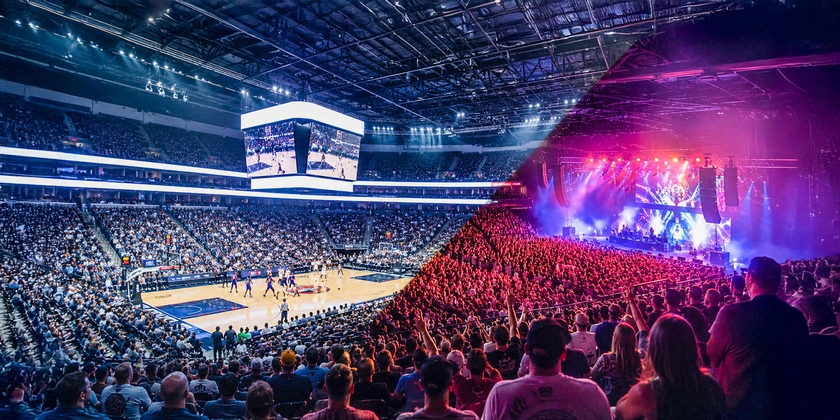
Casey's Center is Des Moines' primary indoor arena, hosting everything from country headliners and hip-hop tours to NBA G League basketball, AHL hockey, and arena football. The building seats up to 19,000, depending on the setup, and the right seat looks completely different depending on what you are seeing. This guide covers how to read the seating map for concerts, what to look for at each sports event, where families tend to land, and how to get there without surprises. Get your Casey's Center tickets at Event Tickets Center before the best sections go.
Casey's Center Seating Chart Overview
Casey's Center runs a standard three-tier bowl: lower level, club level, and upper level. The lower level wraps around the floor and puts you closest to the stage or playing surface. The club level sits above it with wider seats, premium food options, and a slightly elevated angle. The upper level completes the bowl and offers the most affordable views.
The arena reconfigures between concert mode and sports mode. For concerts, the floor becomes a stage area or GA pit, and rear lower bowl sections behind the stage are typically curtained off. For basketball, hockey, and arena football, the floor opens into the full playing surface. Casey's Center is home to Iowa Wolves basketball, Iowa Wild hockey, and Iowa Barnstormers arena football, alongside a full concert calendar throughout the year.
Casey's Center Concerts
Concert seating at Casey's Center depends on two things: how close you want to be to the artist, and whether the show is set up as end-stage or center stage. Getting those two questions right before you buy saves a lot of regret.
Where Sound and Sightlines Hit Best
The floor is the most immersive option. GA floor means standing close to the stage, which works well for high-energy acts. Reserved floor rows give you a fixed spot and a cleaner sightline if you prefer not to stand for three hours. Either way, floor seats put you inside the production rather than watching it from a distance.
The lower bowl side sections deliver the best overall balance. You get strong sound, a direct view of the stage, and enough elevation to see over the crowd. For high-production tours like Luke Bryan or Journey, the club level is worth the step up: the elevated angle shows the full stage layout, the lighting rig, and the screens in a way that lower bowl corners miss. For a denser, louder show like Lil Wayne, the lower bowl sections nearest the stage deliver the energy without losing sound quality. The upper bowl is the budget move and works best in the sections directly facing the stage rather than the side angles.
End-Stage vs. Center
End-stage setup
The most common configuration at Casey's Center. Here, the stage sits at one end of the arena, and the rear lower bowl sections behind it are curtained off. While those sections are not sold, surrounding lower bowl sections can still have awkward angles if they sit too far around the curve. Check the seating map for your specific show at our Casey's Center page to see exactly which sections are available.
Center stage (in the round) setup
Less common but worth knowing about. The stage sits on the arena floor, and every seat faces inward. In that configuration, lower bowl sections all the way around become prime real estate, and the upper bowl works better than it does for end-stage shows. Be sure to check the configuration before you decide on any one section.
Iowa Wolves, Iowa Wild, and Barnstormers Games
Each sport at Casey's Center uses the floor differently. Basketball puts the court lengthwise on the floor, hockey fills the space with ice, and arena football uses a shorter field that fits end to end. In all, the section that makes sense for one sport may not be the best call for another.
Iowa Wolves basketball
For Iowa Wolves basketball, the lower bowl sideline sections mid-court are the standard choice. You see the full court, you follow the offense and defense in both directions, and the center-court angle is exactly what you are used to watching on TV. Baseline sections are a good lower-cost option if you want to be close to the action and do not mind the end-zone perspective.
Iowa Wild hockey
For Iowa Wild tickets, center-ice lower bowl is the sweet spot. You see plays develop from one end to the other without turning your head. Upper bowl sections behind the goals can be fun for the energy during power plays, but the upper bowl corners make it harder to track puck movement across the neutral zone.
Iowa Barnstormers arena football
Check the current Iowa Barnstormers schedule if you are planning an arena football visit. The field fits fully on the floor, and lower bowl sections along the sideline give you the clearest view of the line of scrimmage.
Sitting with kids
For families, the lower bowl sections closest to a concourse entrance are the practical pick. Easy exits matter more than most parents expect until they are managing a bathroom run during the third period. Sections near the main concourse level cut that walk down significantly compared to the lower bowl rows closest to the floor.
The upper bowl works fine for kids who are old enough to handle the stairs, but the top rows are steep and feel far away for younger children. The club level is worth considering if your group wants a quieter and more comfortable environment with better food options and easier movement. For hockey and basketball, mid-lower bowl sections near the baselines or end zones are often priced lower than center-ice or center-court while still keeping kids close enough to stay engaged.
Casey's Center Tickets, Parking, and Entry Tips
Getting to Casey's Center is straightforward if you plan ahead. A few logistics details can make the difference between walking in relaxed and rushing to your seat at tip-off.
How to Get to Casey's Center
Casey's Center sits in downtown Des Moines at 233 Center St. Parking options near the venue include:
- The connected arena parking garage (Parking Passes are available for purchase in advance)
- Surface lots and ramps within a few blocks
- Street parking and city-operated ramps throughout the downtown core
If you are coming by transit, check the DART (Des Moines Area Regional Transit) website for routes serving downtown on event nights. Concerts typically open doors 60 to 90 minutes before show time.
Also, keep in mind that Casey's Center operates under a clear-bag policy. Permitted bags are:
- Clear plastic, vinyl, or PVC bags no larger than 12 by 6 by 12 inches
- Small clutch purses no larger than 4.5 by 6.5 inches
Confirm the current policy on the arena’s official site before your visit, as policies are subject to change. Arrive early: entry lines at the main doors move faster before the pre-show rush.
Tickets You Can Trust
You know the layout, you know which sections work for your event, and you know what to expect when you arrive. The only thing left is locking in your seats. Buy your Casey's Center tickets at Event Tickets Center and find the right spot for every show on the calendar.


